
How 17 Years of Commercial Photography Shaped My Fine Art Work
I spent most of my career making images for other people. Agencies would send a brief, I'd solve the visual problem, and the final image belonged to the campaign. That's advertising photography — you serve the brand, the product, the message. Your taste matters but only within the frame the client defines.
For years I didn't think much about that. The work was good. The clients were real — Pepsi, General Motors, American Express, Coca-Cola. The campaigns ran across Latin America. The awards came. I was doing exactly what I'd trained to do.
But at some point I started noticing that the images I thought about at night — the ones that stayed with me — were never from a brief. They were the ones I shot for no one. The ones with no deadline, no format requirement, no approval chain. The ones that existed because I wanted to see them exist.
That tension between commercial discipline and personal vision is what eventually led to The Dana Gallery.
What commercial work teaches you
People sometimes treat commercial photography and fine art as opposite ends of a spectrum. I don't see it that way. Everything I learned shooting campaigns for 17 years across 10 countries feeds directly into the fine art work.
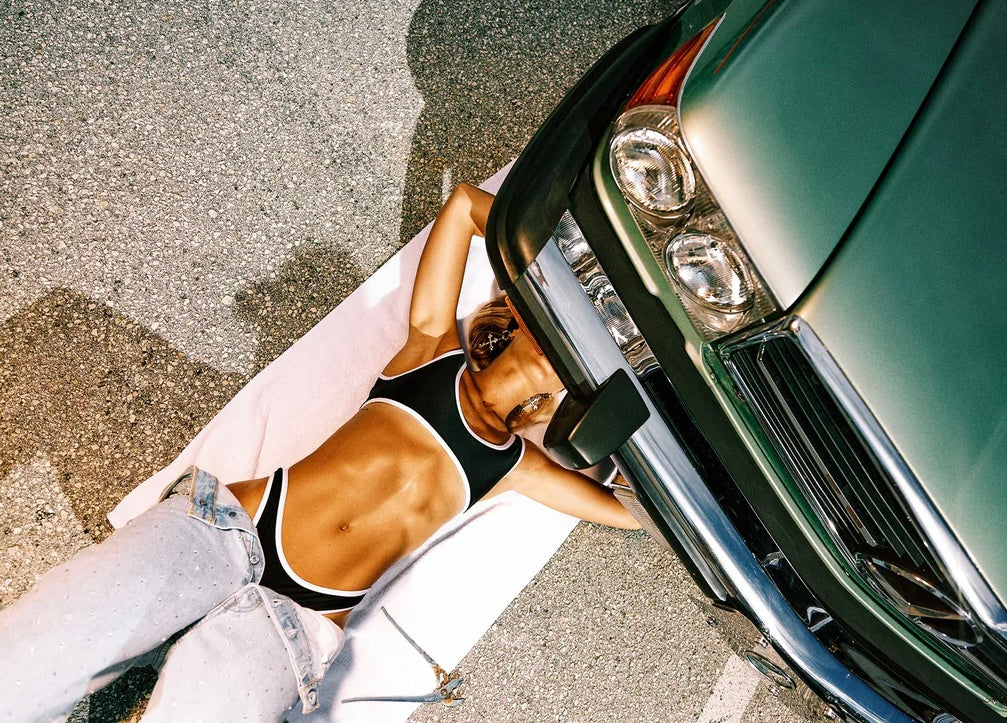
Lighting. I can light anything because I've had to light everything — cars at dawn with 30 minutes of usable light, food under controlled studio conditions, celebrities who give you 20 minutes and expect perfection. That technical control doesn't disappear when I pick up a camera for myself. It becomes the foundation.
Composition under pressure. When you're on set with a crew of 15 people and the client is watching, you learn to see fast. You learn to compose with purpose. Every element in the frame has to justify its presence. That discipline carries over into art — except now the "client" is my own standard, which is harder to satisfy.
Understanding what makes an image hold attention. At ASA Creative we built a data science department that studies what makes content perform. We've analyzed thousands of ads. That knowledge — what holds a viewer, what creates an emotional response, what makes someone stop — lives in my head when I'm making art too. I don't use it the same way. But it's there.
What fine art gives back
The commercial work made me technically precise. The fine art work made me honest.
When there's no brief, no client, no format requirement — you have to confront what you actually want to say. That's harder than it sounds. After years of solving other people's visual problems, sitting down with a blank frame and asking "what do I want to make?" felt uncomfortable at first.
But the images that came out of that discomfort were different from anything I'd produced commercially. Slower. More personal. Less concerned with being impressive and more concerned with being true.
And the strange thing is — that honesty started feeding back into the commercial work. The music videos got more personal. The brand campaigns got braver. The creative direction became less about what looks right and more about what feels right.
Why a gallery — and why now
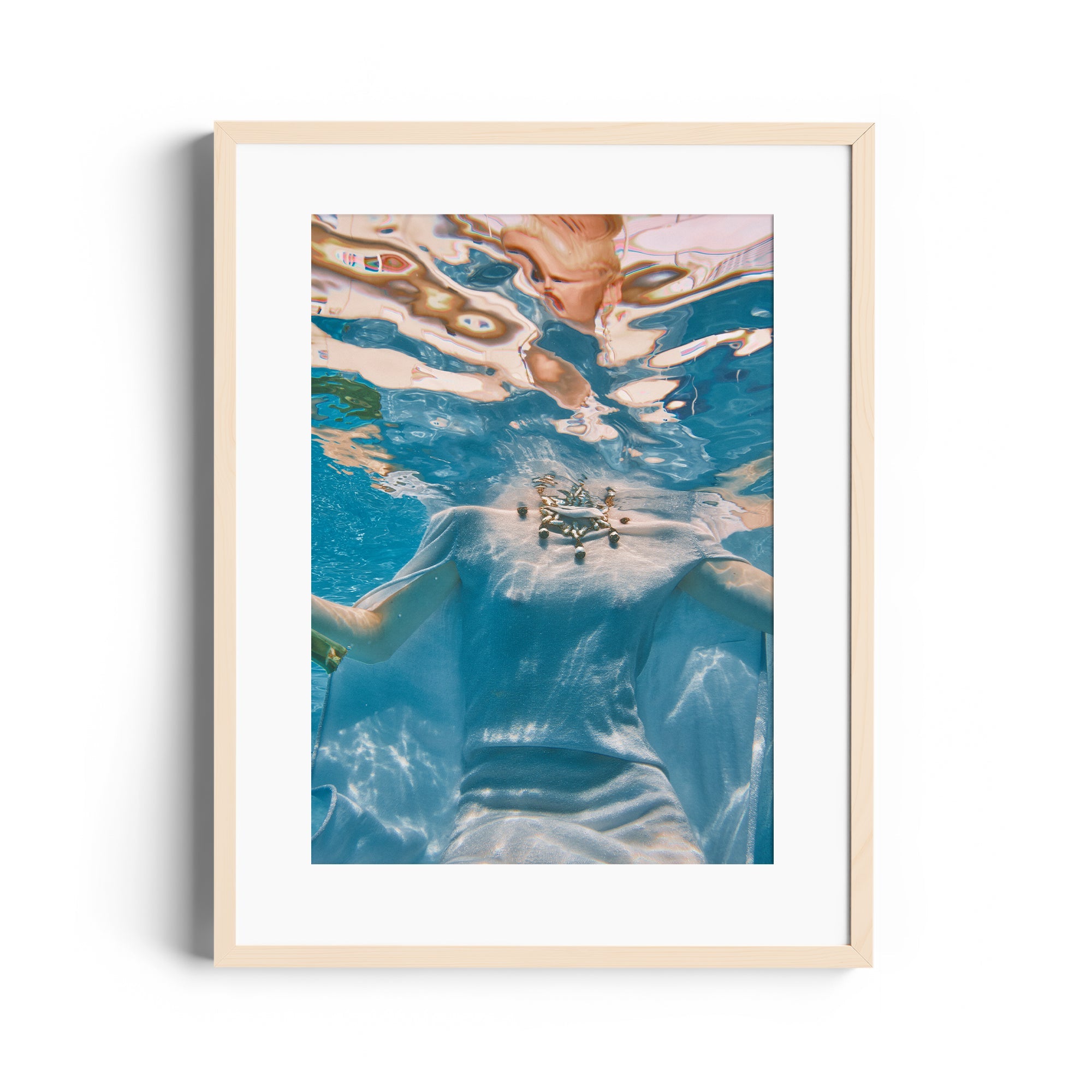
The Dana Gallery started because I believe photographers — both emerging and established — deserve a space where their work is treated as art, not content.
The industry pushes everyone toward volume. More posts, more reels, more deliverables. The work gets consumed and forgotten in hours. A photographer can spend years developing a voice and the only place it lives is an Instagram grid that the algorithm buries by Tuesday.
I wanted to build the opposite of that. A space where the work is presented with intention — museum-grade archival prints, limited editions, the kind of presentation that respects both the artist who made it and the person who puts it on their wall. Not content. Not a feed. Something permanent.
The gallery gives emerging artists in the US a platform to show fine art photography alongside established work. Not in a juried-show way where you pay a fee and hope for the best. In a curated way — where the work is selected because it's genuinely strong, produced at the highest print quality available, and positioned for collectors who care about what they're buying.
For established photographers who've spent their careers in commercial work, the gallery offers something different: a place to show the images that don't fit a brief. The personal work. The experiments. The pieces that a client would never commission but that represent who you actually are as a photographer.
And for collectors and art buyers — the gallery is a way to access exclusive, limited-edition photographic work from artists with real production backgrounds. These aren't prints from someone who bought a camera last year. These are images made by people who understand light, composition, and visual storytelling at a professional level — and chose to apply that knowledge to something personal.
Education as part of the mission
Over the years I've taught more than 200 young photographers through workshops — many of them sponsored by BBDO, one of the largest advertising agencies in the world. Teaching has always been part of what I do. I was a photography professor when this whole journey started.
The Dana Gallery carries that same spirit. The work we curate, the artists we platform, the way we present photography as a serious art form — all of it is educational in its own way. We want people to understand that photography isn't just documentation. It's a medium with the same depth, intentionality, and emotional range as painting or sculpture. When someone sees a fine art print on a wall — not on a screen, not in a feed — they experience it differently. That experience is part of what we're building here.
Two sides of the same practice
I still run ASA Creative with Miriam Rabascall. We still produce campaigns for major brands and labels. We still direct music videos for Warner, Sony, Universal. That work hasn't slowed down — if anything, it's stronger now because the fine art practice keeps me sharp in ways that pure commercial work never could.
The two sides need each other. The commercial discipline keeps the art rigorous. The art keeps the commercial work alive. Take away either one and the other suffers.
Every piece at The Dana Gallery comes from that intersection — technical mastery built over decades of commercial production, combined with the freedom to create images that answer to nobody but the artist.
That's what we're building. A home for photography that matters.
Diego Sanchez Cadavid is a photographer and creative director based in Miami. He co-founded ASA Creative, a production company working with Fortune 500 brands and major music labels. His commercial work has been recognized with a Gold Effie Award, shortlisted at Cannes Lions, and published in Lürzer's Archive "200 Best Ad Photographers Worldwide." His fine art photography is available exclusively through The Dana Gallery.